Not All Plastics Are Harmful to Your Health?
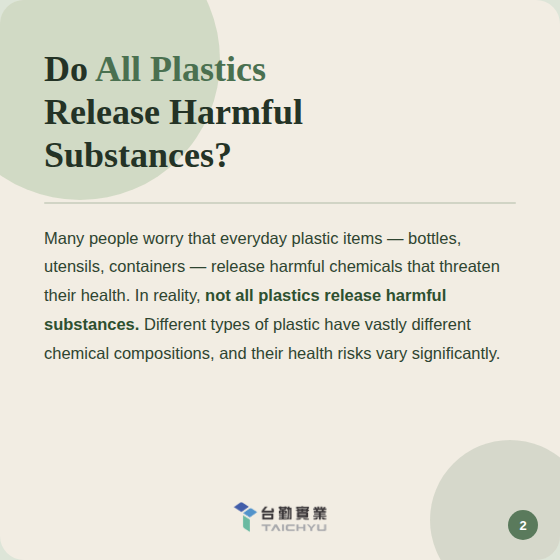
Plastic is often treated as a single category — but in practice, different types carry very different health implications. Here's what the science actually says.
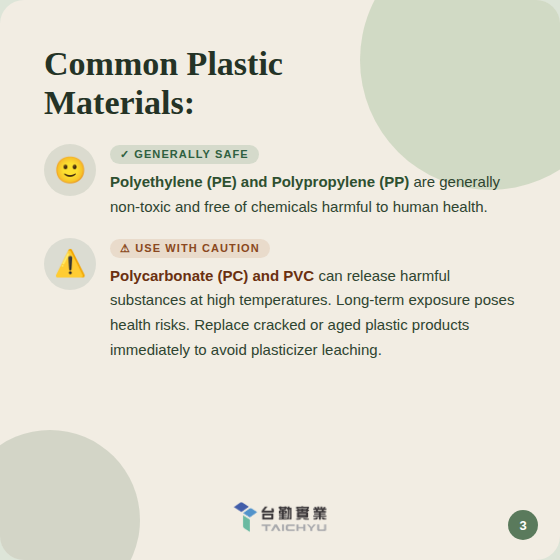
Polyethylene (PE) and Polypropylene (PP) Among the most widely studied plastics, PE and PP are generally considered safe for everyday use. They don't readily release harmful chemicals under normal conditions. As a precaution, avoid prolonged exposure to high heat, which can accelerate material degradation.
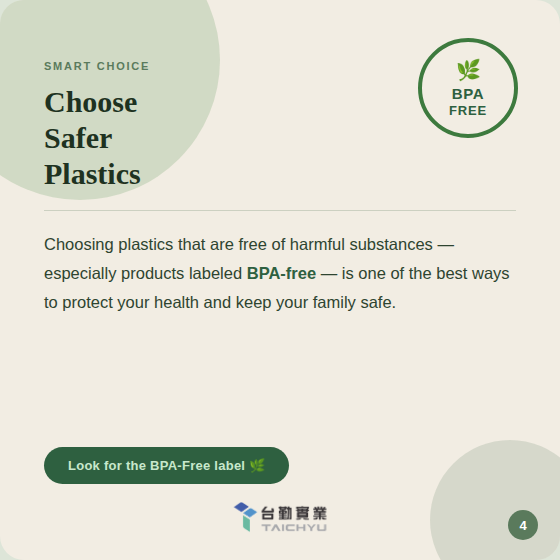
Polycarbonate (PC) PC plastics contain Bisphenol A (BPA), a compound that can interfere with the endocrine system. Under high temperatures — such as microwaving or leaving bottles in direct sunlight — BPA can leach into food and beverages. When possible, opt for products labeled BPA-free.
Polyvinyl Chloride (PVC) PVC often contains phthalates, a class of plasticizers linked to reproductive and hormonal health risks. The risk increases when PVC products are exposed to heat or begin to deteriorate. Limiting contact with PVC, particularly in food applications, is a reasonable precaution.
A practical note For food-contact materials, look for products that meet FDA or equivalent safety standards. And regardless of material type, replace plastic items once they show signs of wear or cracking.
Understanding what's in the plastics you use daily is a straightforward step toward making more informed choices.